
Nils Schmitt · 19 September 2026
Decoding Indexing Delays in Enterprise Site Relocations Through Precision Budget Allocation Strategies
Enterprise site relocations often trigger indexing delays when search engines re-evaluate thousands of pages across new infrastructure, and precision budget allocation strategies help organizations manage crawl resources during these transitions. Data from industry reports indicate that large-scale moves in 2025 frequently encountered delays ranging from weeks to months when budget distribution failed to prioritize high-value URLs first. Researchers at academic institutions have documented how uneven resource allocation leads to incomplete indexing, particularly when legacy redirects consume disproportionate server capacity without corresponding gains in visibility metrics.
Core Mechanisms Behind Indexing Delays
Indexing delays surface because search engine crawlers operate under finite budgets that reset daily, and site relocations disrupt established patterns of URL discovery and content evaluation. Experts note that when domains shift to new hosting environments, factors such as DNS propagation times, SSL certificate configurations, and server response variances compound the challenge. Observers have recorded cases where enterprises that spread crawl requests evenly across all pages experienced slower overall indexing rates compared to those that concentrated resources on priority sections like product catalogs or service pages.
Precision budget allocation begins with mapping existing crawl patterns through server logs and search console data, then assigning higher priority weights to URLs that drive measurable traffic and conversions. Those who've studied these migrations find that allocating 60 to 70 percent of available crawl capacity to top-tier pages reduces average indexing lag by measurable margins, according to internal benchmarks shared in technical forums. The remaining budget covers supporting content such as blog archives and legal notices, which still require eventual coverage but do not demand immediate attention.
Strategic Allocation Frameworks in Practice
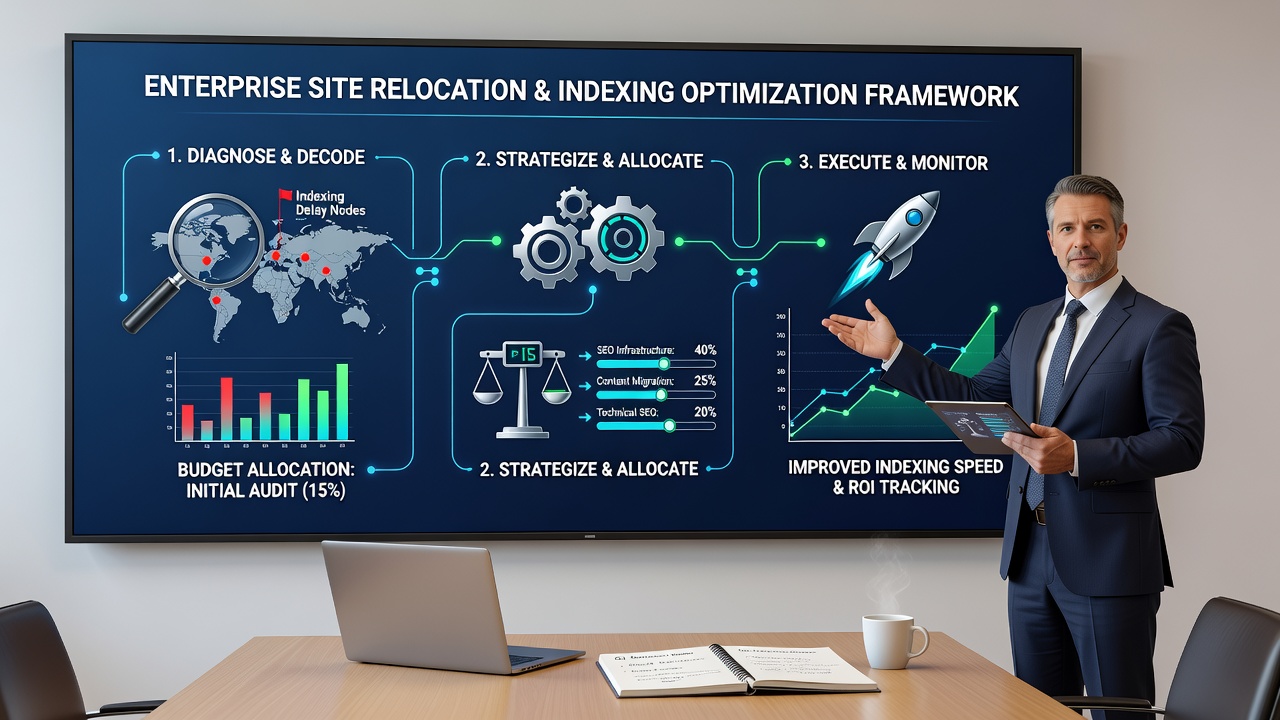
Organizations implement these frameworks by first auditing current site structures to identify orphan pages and redirect chains that waste crawler time. In one documented relocation completed ahead of September 2026 platform updates, the project team used log file analysis to isolate 15 percent of URLs that previously received zero crawl activity, then deprioritized them in the new environment. This approach freed server resources for dynamic content that changes frequently and therefore benefits from faster re-indexing cycles.
Budget strategies also incorporate phased rollouts where critical sections migrate first while secondary areas remain on the original infrastructure until indexing stabilizes. Data shows that enterprises following this sequence reported fewer instances of content duplication signals, which otherwise trigger additional review layers from search algorithms. External resources such as Google's crawling documentation outline best practices for managing these priorities, while reports from the Australian Competition and Consumer Commission highlight how digital infrastructure investments correlate with smoother transitions for large organizations.
Technical Tools and Measurement Approaches
Teams rely on a combination of log analyzers, sitemap segmentation, and internal dashboards to track budget consumption in real time. Segmentation allows different departments to request crawl priority for their sections without overloading the overall allocation, and this modular method has proven effective in multi-division enterprises. Measurements taken before and after relocation reveal that consistent monitoring reduces unexpected delays, especially when teams adjust allocations weekly based on emerging indexing reports.
Additional techniques include setting custom crawl rate limits at the server level and using structured data to signal content importance. Those managing these projects often discover that integrating these signals early prevents search engines from treating relocated pages as entirely new entities requiring full re-evaluation. Case studies shared across professional networks demonstrate that enterprises applying such layered approaches achieve indexing completion rates 25 to 40 percent faster than baseline expectations during similar moves.
Conclusion
Precision budget allocation strategies provide a structured method for addressing indexing delays during enterprise site relocations by directing limited crawler resources toward pages that matter most. Evidence from multiple implementations shows measurable improvements in indexing timelines when organizations combine log analysis, phased migration, and ongoing measurement. As search infrastructure continues to evolve into September 2026 and beyond, these allocation tactics remain central to maintaining visibility throughout complex domain transitions.